
About Fuel Crisis England
Evidence before opinion.
Fuel Crisis England is an independent information site explaining UK fuel prices, their wider impact and the policy debate around them. It also provides clearly labelled opportunities for civic participation. Campaign proposals are clearly identified as proposals.
The website brings together data, explanations and interactive tools so visitors can explore the numbers for themselves.
Data • Context • Transparency • Public information
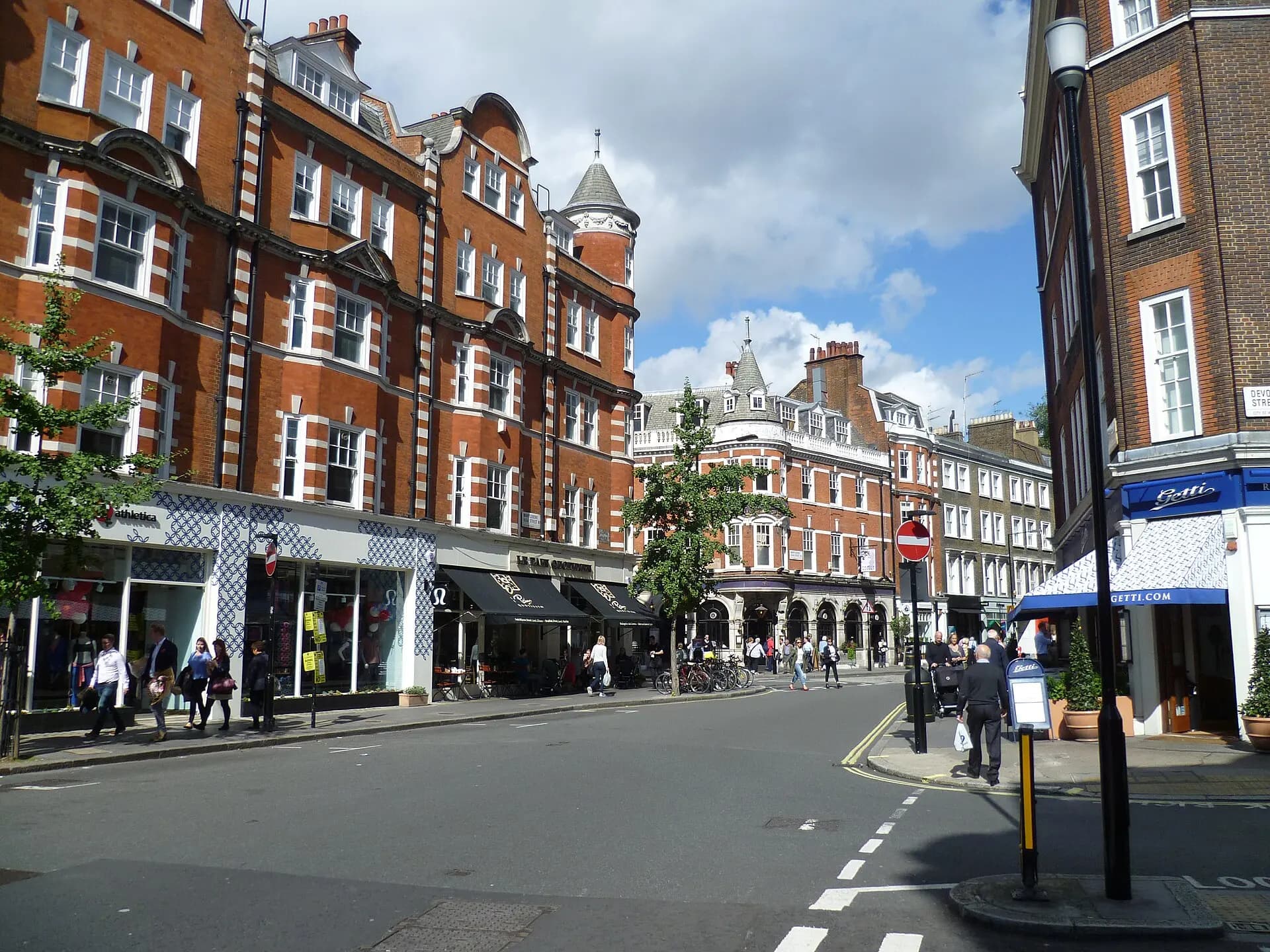
Photo: Philafrenzy, via Wikimedia Commons (CC BY-SA 4.0)
- What is Fuel Crisis England?
- An independent initiative that brings together UK fuel prices, taxes, costs, history and public information in one place.
- Why does it exist?
- The price on a forecourt sign is one number, but many things feed into it. We make those parts easier to understand.
- What does it provide?
- Live and historical fuel data, explainers, calculators, links to news coverage and clearly labelled ways to take part.
- How is it sourced?
- Figures link to original sources such as GOV.UK, HMRC, ONS and the CMA, with dates and labels showing whether each is live, calculated or estimated.
- Is it affiliated with government or a political party?
- No. See Independent Initiative below.
Our campaign
What do we mean by a fuel crisis?
A fuel crisis is not just about running out of petrol or diesel. It is also about what happens when fuel becomes too expensive for ordinary people to afford.
For commuters, families, delivery drivers, tradespeople and small businesses, fuel can be an essential expense rather than an optional purchase. Even when fuel is available, rising prices can put pressure on household budgets, work and everyday life.
The price at the pump reflects several factors, including international oil prices, refining and distribution costs, retailer margins and government taxation. Fuel Duty and VAT are important parts of the tax picture, and government decisions can influence what motorists pay.
Fuel Crisis England campaigns for practical action on fuel affordability, fairer outcomes for motorists and greater transparency about fuel prices and taxation.
Finding a cheaper petrol station helps, but it does not solve the wider affordability problem.
The issues are connected
- High petrol and diesel prices at the pump.
- Fuel Duty: a tax charged per litre, set by government.
- VAT on fuel purchases.
- International oil prices, refining and distribution costs, and retailer margins.
- The effect of expensive fuel on commuters, families, delivery drivers, tradespeople, carers and small businesses.
- The wider cost of living, and the difficulty of travelling when driving is essential.
We do not claim that all price rises come from taxation, or that the government sets every pump price. Taxes are one part of a price shaped by global markets and by retailers too.
What is in a pump price, and who can change it?
Four parts add up to the price on the forecourt sign. The boxes show what each part is, not how big it is; the proportions change from week to week.
1. Set by the market
Oil, refining and shipping
- International crude oil prices and the exchange rate.
- Refining and delivery to the forecourt.
More about thisShow less
These costs move with world markets and are not set by the UK government. They are already inside the weekly price we show. We do not publish a split of this part, because no verified public split exists.
2. Set by the market
Retailer margin
- What the forecourt keeps to cover its costs and profit.
- Set by each retailer, in a market the CMA monitors.
More about thisShow less
The Competition and Markets Authority reports market-wide average margins. They vary by retailer, place and week. Our Follow the Money page shows the latest CMA figure.
3. Set by government
Fuel Duty
- A flat tax charged per litre, set by government.
- 52.95p a litre now.
- Scheduled: 55.95p from 1 January 2027.
More about thisShow less
Fuel Duty is charged per litre whatever the price, so it is a larger share of the pump price when fuel is cheap and a smaller share when fuel is dear.
4. Set by government
VAT
- 20% charged on the price including Fuel Duty.
- Set by government.
More about thisShow less
Because VAT is charged on a price that already includes Fuel Duty, a change to the duty also changes the VAT collected. At 20%, VAT is one-sixth of the VAT-inclusive pump price.
Government can influence
- The rate of Fuel Duty.
- The rate of VAT.
- How closely fuel pricing and competition are monitored, and how transparent prices are (for example through the Fuel Finder scheme).
Government cannot directly control
- The world price of crude oil.
- Exchange rates, refining and shipping costs.
- The price any individual retailer chooses to charge.
Campaign commentaryTaxes are only part of the price, and not every rise at the pump comes from them. FCE's case is that the parts government does set should be decided with the evidence in view, and that prices should be more transparent.
Sources: GOV.UK, Amended Fuel Duty rates 2026 to 2027 (opens in a new tab) · GOV.UK, VAT rates (opens in a new tab). Fuel Duty is scheduled to rise to 55.95p on 1 January 2027 and 57.95p on 1 March 2027 under current legislation; final rates are to be confirmed at Budget 2026.
Budget 2026 is scheduled for 28 October 2026. It has not yet taken place, so the future rates shown are scheduled, not final. Sources: HM Treasury (opens in a new tab), GOV.UK rates (opens in a new tab). Checked 11 October 2026.
01Our purpose
What this website is for
Fuel prices can look like a single number on a forecourt sign, but that number is influenced by multiple parts of the economy. Our purpose is to make those parts easier to understand.
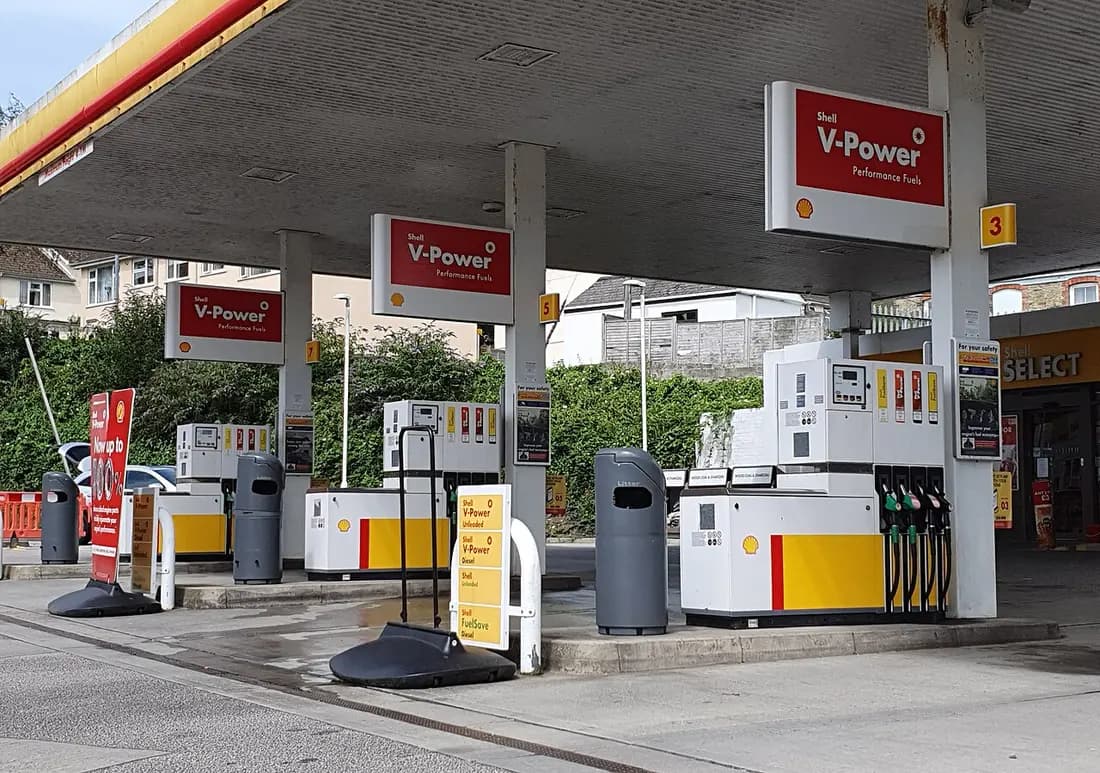
Photo: Mutney, via Wikimedia Commons (CC BY-SA 4.0)
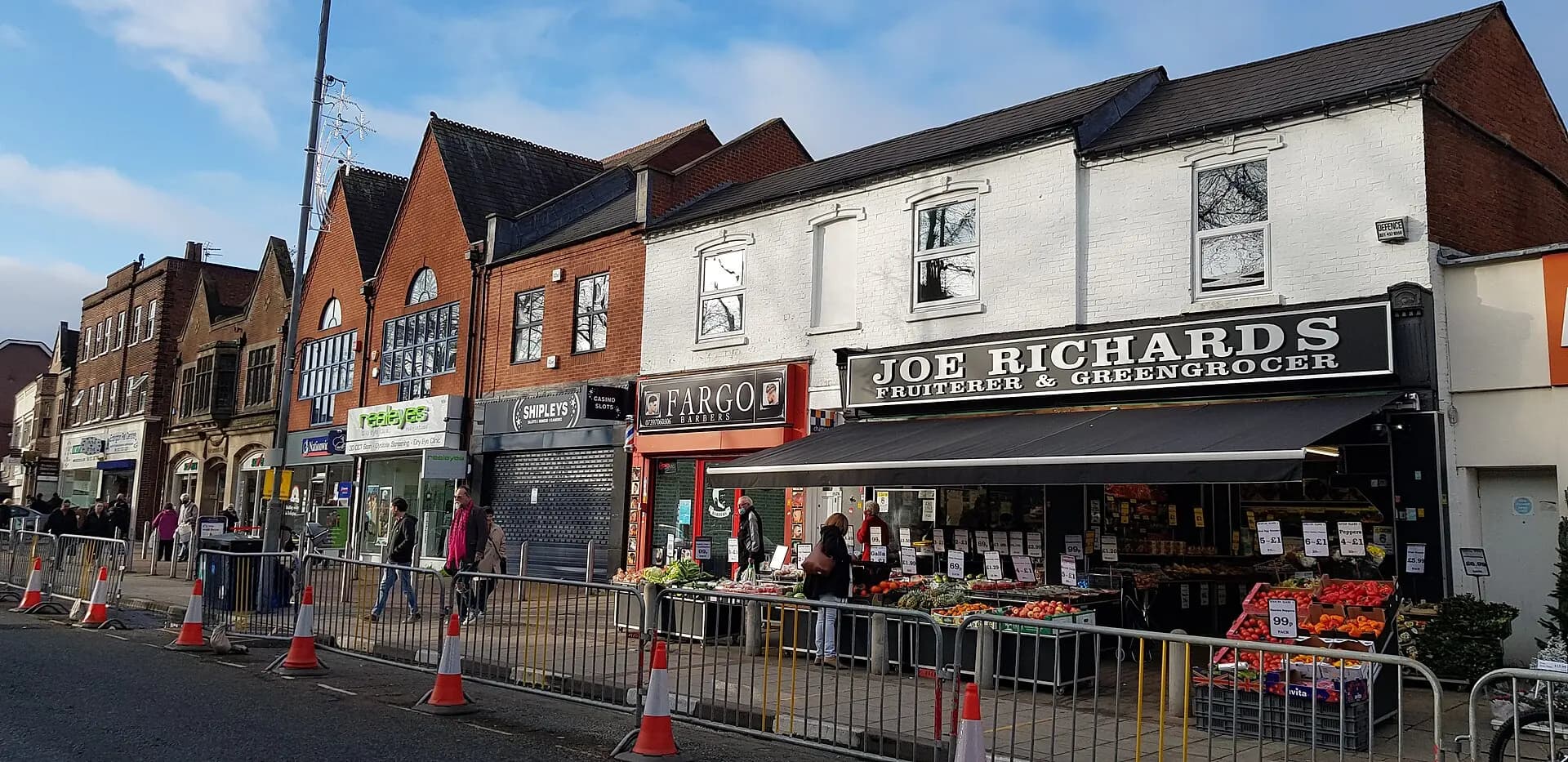
Photo: Paul Collins, via Wikimedia Commons (CC BY-SA 2.0)
Educate
Inform
Explain
Provide accessible data
Make complex economic information easier to understand
Show how fuel prices are constructed
Explain taxation and Fuel Duty
Explore how fuel costs affect households and businesses
Compare historical prices and wages
Provide tools that allow people to explore the evidence themselves
The website is designed to help visitors ask informed questions and understand the evidence behind the numbers.
02Independence
Independent Initiative
Fuel Crisis England is not affiliated with, owned by, operated by, or controlled by any political party, political campaign, government department, elected representative or government body.
The website does not represent the views of any political party or government.
Fuel Crisis England is an independent web project focused on fuel prices, economics, data and public information.
Funding & backing
No political or corporate backing
Fuel Crisis England currently has no external funders, corporate sponsors, political backers or financial sponsors. The project is independently operated and is not directed by an outside political organisation, company, campaign or government body.
This means there are no external funders or sponsors directing the site's editorial or policy content.
03Impartiality
Our approach to impartiality
Fuel Crisis England aims to separate evidence, calculation, analysis and opinion.
Source the numbers
Where a figure comes from an external organisation, we identify the source.
Show uncertainty
Where data is incomplete, estimated or subject to limitations, we say so.
Explain methodology
Where different methodologies produce different results, we explain the difference.
Separate fact from interpretation
We distinguish documented facts, calculations, analysis and campaign or policy proposals.
Don't present opinion as fact
Political opinions and policy positions are not presented as established facts.
Let people examine the evidence
The website provides information and tools so visitors can form their own views.
Evidence can be complicated. Our aim is to make it clearer, not to make the answer look simpler than it is.
04Our data
Where does the data come from?
The website uses publicly available information from sources such as:
Office for National Statistics
GOV.UK
Department for Energy Security and Net Zero
Bank of England
HM Treasury
HM Revenue & Customs
Competition and Markets Authority
European Commission
Other clearly identified primary or reputable sources where necessary
Every important figure should have a source, date or period, unit and geographical scope where applicable.
05Explore the data
Explore the evidence for yourself
Fuel Prices
See current and historical fuel prices.
Why Is Fuel So Expensive?
Understand the components between crude oil and the pump.
Follow the Money
Explore Fuel Duty, VAT, industry economics and government revenue.
Cost of Living
Explore fuel alongside wages, inflation and household costs.
Europe
Compare UK fuel prices with European data where methodologies are comparable.
Save Fuel
Practical information about driving efficiency and vehicle maintenance.
Historical Explorer
Explore fuel prices, wages, tax and inflation across different years.
Sources & Evidence
See where the numbers come from.
Take Action
Neutral information about lawful civic participation, contacting representatives and examining policy proposals.
06A note on interpretation
Reading these figures carefully
Fuel prices are influenced by multiple factors, including crude oil prices, exchange rates, refining, wholesale markets, distribution, retail costs and taxation.
Government policy is one part of the overall system, and the website does not claim that any single organisation or factor determines the pump price.
Historical comparisons should be interpreted carefully because economic conditions, vehicle efficiency, household composition, wages, taxes and statistical methodologies change over time.
These factors interact with each other and can each change independently, so no single stage determines the price on its own.
07Who we are
An independent web project
Fuel Crisis England is an independent, non-profit web project focused on fuel prices, economics, data and public information.
We aim to make complex information easier to understand, provide transparent sources and give visitors tools to explore the evidence themselves.
Created by HK Creative Web
Website created by HK Creative Web.
Have an idea? Get in touch.
Fuel Crisis England is built to give people a place to understand fuel prices, share information and discuss practical policy ideas.
If you have a suggestion, idea, question, correction, or topic you think we should investigate, we'd like to hear from you. Your feedback can help us improve the website and make sure we're covering the issues that matter to motorists, households and businesses.
07943 137238 contact.fuelcrisisengland@gmail.com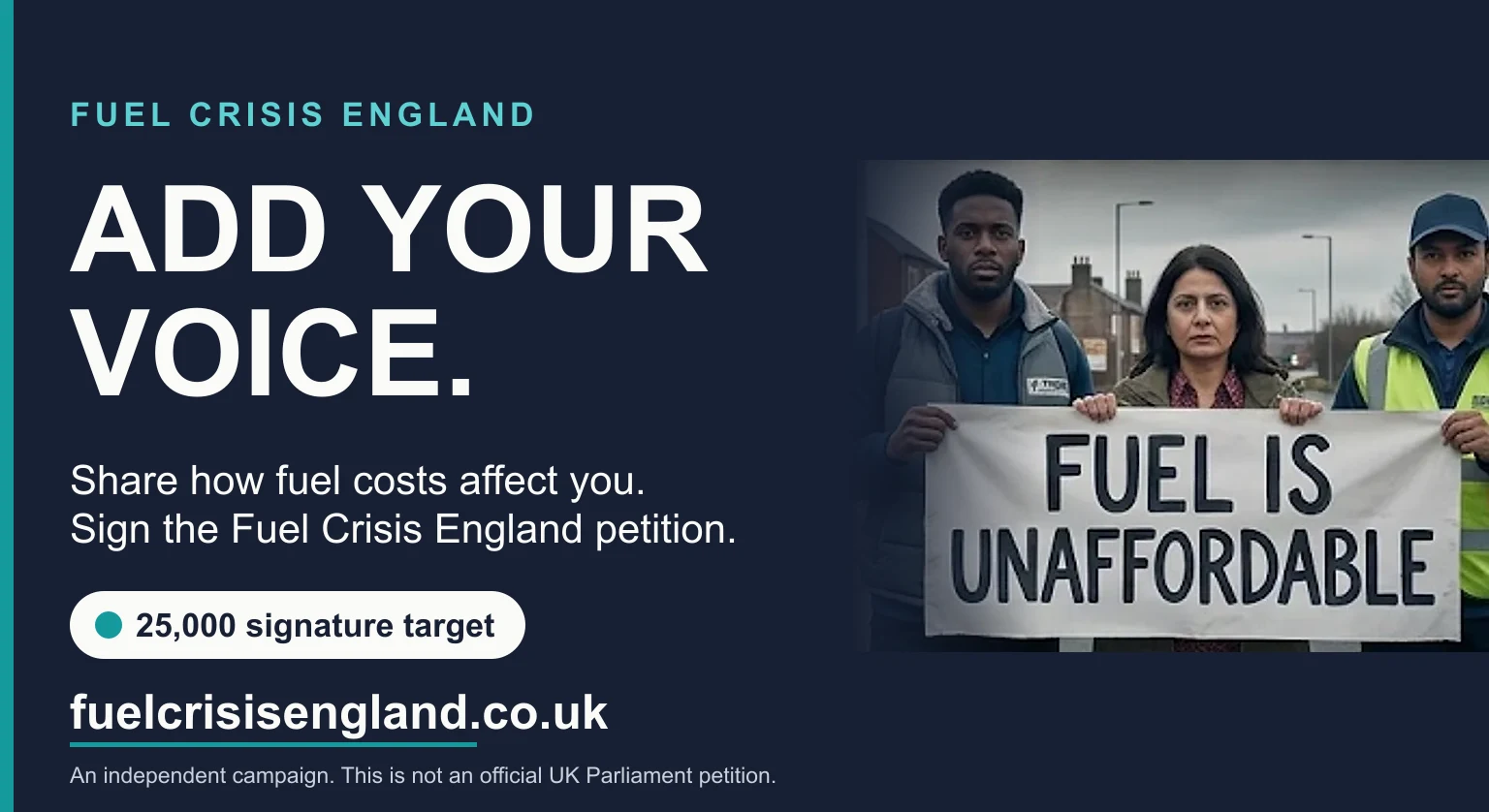
Tap the image to sign. This is Fuel Crisis England's own petition, not an official UK Parliament petition.