
Petrol
175.3p/L
Increased by 0.4p compared with the previous week
12 October 2026
FCE: Fuel Crisis England
Fuel Crisis England brings together fuel prices, taxes, costs, history and public information in one place.
A fuel crisis is also about affordability, taxation and the cost of living, not only about whether fuel is on the shelf.
Real signatures on our own campaign petition. Check the sources
Last updated:
UK weekly average pump prices
Petrol
175.3p/L
up 0.4p on the previous week
Diesel
200.0p/L
up 0.5p on the previous week
Week commencing 12 October 2026, published 12 October 2026. GOV.UK / DESNZ (opens in a new tab). National averages, not the price at any one station.
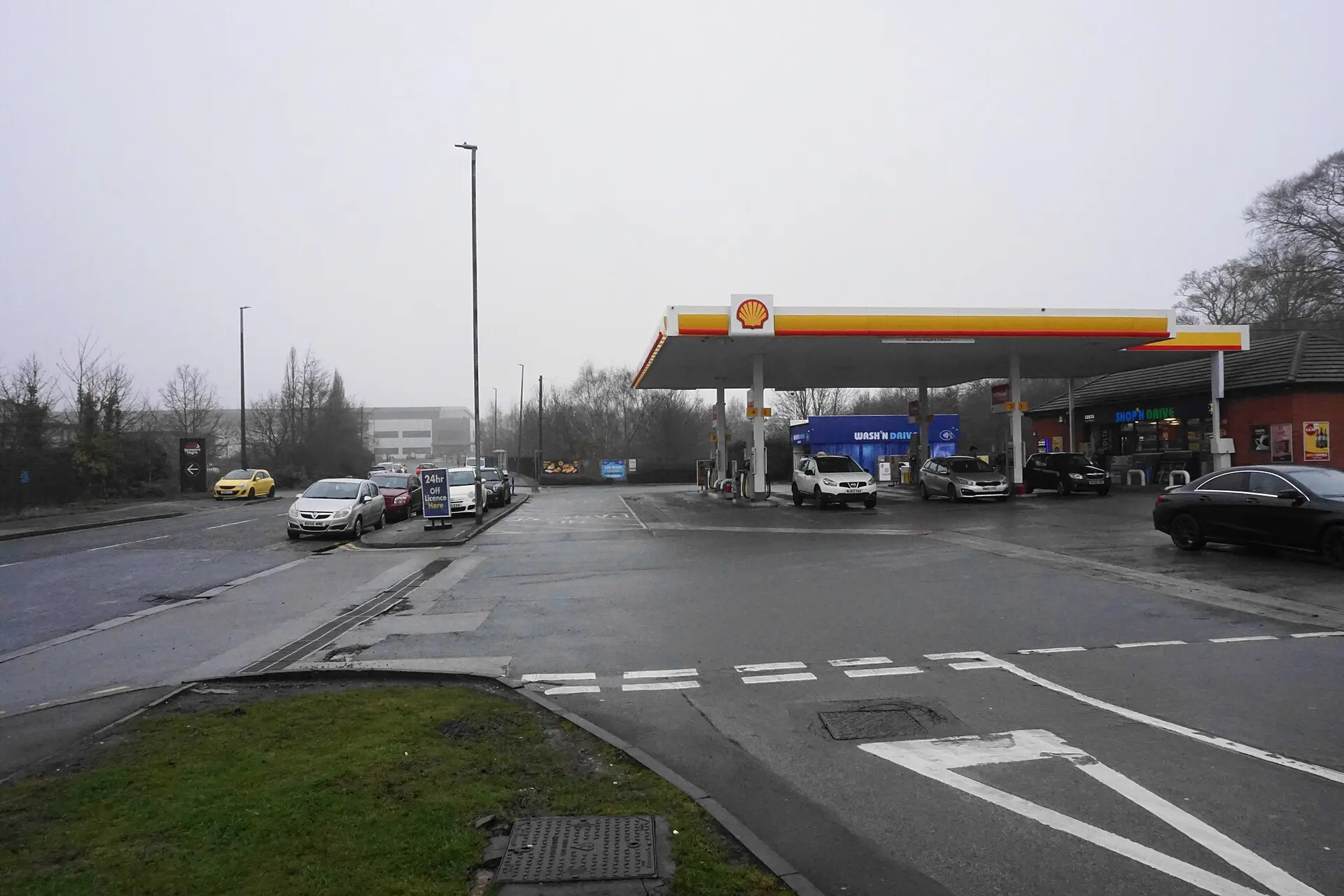
Photo: Bill Boaden, via Wikimedia Commons (CC BY-SA 2.0)
Finding a cheaper petrol station can help motorists save money. But it does not solve the wider fuel affordability problem.
Fuel Crisis England believes the government must do more to address the costs facing motorists, commuters, delivery drivers, tradespeople, families and small businesses. Price-comparison tools can help people make informed choices, but they cannot replace decisions on taxation, policy and practical support.
We welcome useful tools that improve price transparency. However, making motorists search harder for an affordable pump price is not a substitute for meaningful action to make fuel more affordable.
Now
UK national weekly average pump prices from GOV.UK / DESNZ. These are averages, not live prices at any one station.
175.3p/L
Increased by 0.4p compared with the previous week
12 October 2026
200.0p/L
Increased by 0.5p compared with the previous week
12 October 2026
Fuel prices updated: week commencing 12 October 2026 · last successfully checked 19 Oct 2026, 11:15 · GOV.UK / DESNZ: Weekly road fuel prices
See what's changed this weekOur campaign
A fuel crisis is not just about running out of petrol or diesel. It is also about what happens when fuel becomes too expensive for ordinary people to afford.
For commuters, families, delivery drivers, tradespeople and small businesses, fuel can be an essential expense rather than an optional purchase. Even when fuel is available, rising prices put pressure on household budgets, work and everyday life.
The price at the pump reflects several things: international oil prices, refining and distribution costs, retailer margins and government taxation. Fuel Duty and VAT are important parts of the tax picture, and government decisions can influence what motorists pay.
Finding a cheaper petrol station helps, but it does not solve the wider affordability problem.
Fuel Crisis England campaigns for practical action on fuel affordability, fairer outcomes for motorists and greater transparency about fuel prices and taxation. See our policy demands.
New · 8 October 2026
Google Maps and Waze can help motorists compare fuel prices and find cheaper stations. That is useful information, and people should be able to make informed choices.
But comparison tools do not, by themselves, reduce the underlying cost of fuel. A cheaper station may still be expensive, may be too far away to justify the journey, or may not solve the problem for people who have no realistic alternative to driving.
Petrol stations must report price changes to the government's Fuel Finder scheme, so apps can show nearby prices side by side.
If a station within easy reach charges less, a driver can save some money on a fill-up.
Clearer prices make it easier to see where fuel costs less, and to ask why prices differ.
Comparing stations moves a driver from one price to another in the same market. If prices are high everywhere, a cheaper station is still expensive.
Fuel Duty is a flat charge per litre and VAT is added on top. Every station has to include both, and government sets both rates.
Carers, tradespeople, delivery drivers and people in rural areas may have no practical alternative to driving, or few stations within reach.
Extra miles use fuel and time. Try the detour calculator to see when the saving is used up.
Fuel is an essential cost for many households and for businesses that run on the road.
Sources: Google: fuel prices in Google Maps and Waze (UK) (opens in a new tab) · GOV.UK, 8 October 2026 (opens in a new tab) · GOV.UK: Fuel Finder (opens in a new tab)
Better price information should be part of the solution.
Add your voice on fuel affordability. This is an FCE campaign petition, not an official UK Parliament petition.
At the pump
UK average pump prices from the latest GOV.UK / DESNZ weekly data. The rest of this site shows what is in that price, and where the money goes.
Unleaded (petrol)
£1.75
Diesel
£2.00
Follow the money
Pick an amount and see an illustrative breakdown based on the latest verified petrol price and current tax rates.
Fuel Duty receipts
£24.25bn
Financial year 2025 to 2026 (provisional)
Source: HMRC Hydrocarbon Oils BulletinWhere does your £50 go?
Based on a petrol price of 175.3p/litre in 2026. The exact split varies with the fuel price, wholesale costs, retailer margins, and VAT at any given time — this is not a fixed formula.
The wholesale, refining, distribution and retail figures are estimates and should not be interpreted as company profit.
Policy
Fuel Duty is a fixed tax per litre, set by government. Below: what is in force, what is scheduled under current legislation (final rates to be confirmed at Budget 2026), and what is only a stated intention.
Current rate
52.95p per litre
Current rate, extended to 31 December 2026.
Scheduled changes (final rates to be confirmed at Budget 2026)
Policy intention — not yet law
Possible return to RPI-linked uprating. No confirmed rate exists yet.
Budget 2026 is scheduled for 28 October 2026. It has not yet taken place, so the future rates shown are scheduled, not final. Sources: HM Treasury (opens in a new tab), GOV.UK rates (opens in a new tab). Checked 11 October 2026.
The scenarios are illustrations based on the numbers you choose, not predictions. FCE's own campaign proposals are listed separately on Our Demands and are labelled as proposals.
Then. Now. What changed?
These are weekly UK average prices, not annual averages. Wages changed too, so compare the figures alongside earnings before drawing conclusions. Source: GOV.UK / DESNZ.
History
Weekly UK average petrol and diesel prices from GOV.UK / DESNZ over the last year.
UK weekly average pump prices, pence per litre, one point per month (latest week in each month). Source: GOV.UK / DESNZ weekly road fuel prices. Download the full weekly series (CSV)
Europe
UK pump prices against the EU-27 average, both shown in euros per litre, taxes included.
| Fuel | UK | EU-27 average |
|---|---|---|
| Petrol | €1.95 | €2.06 |
| Diesel | €2.22 | €2.16 |
Evidence before opinion
Figures on this site are linked to their original sources and labelled as live, historical, provisional or calculated.
Tap the image to sign. This is Fuel Crisis England's own petition, not an official UK Parliament petition.
The number on the pump is only the beginning.
Part of the price comes from global markets. Part comes from taxes. This site shows how the different parts fit together using published figures.
Start with one litreOne litre. Several costs.
Follow one litre from crude oil to the forecourt and see what happens to its price along the way.
Steps 1–6 are market and company costs. Steps 7 and 8 are taxes set by government. Market and company costs are not the same as profit.
The same price doesn't affect everyone equally
Fuel costs can affect households, workers and businesses differently depending on how much they drive and what alternatives they have.
School runs, shopping and family journeys can all be affected by higher fuel costs.
People without practical public-transport alternatives may have fewer options when driving costs rise.
High mileage can make fuel a significant operating cost.
High daily mileage can make drivers particularly exposed to fuel-price changes.
How it can spread
This is a general economic mechanism, not a fixed rule. The effect varies by industry and circumstances.
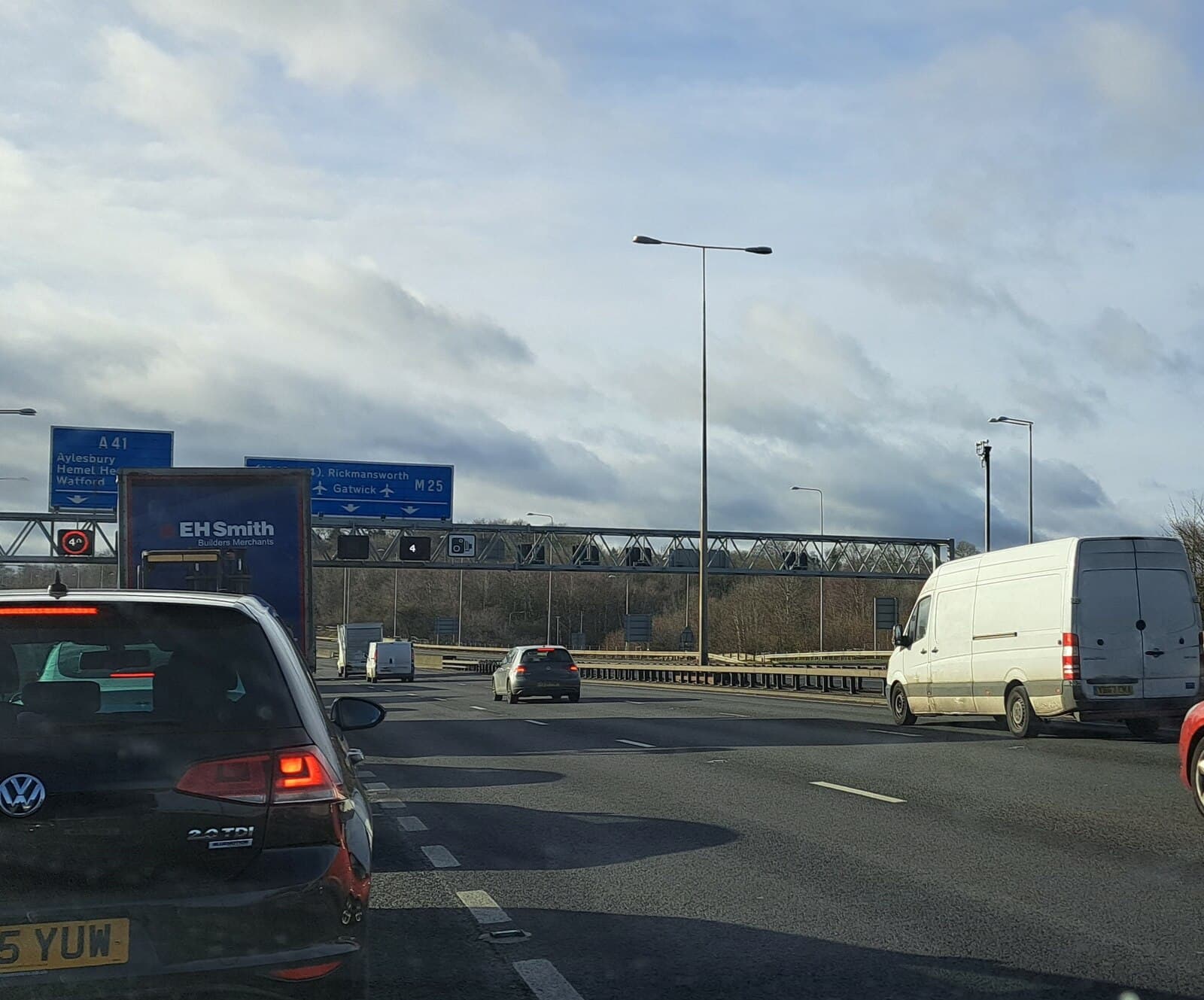
Photo: Christopher Hilton, via Wikimedia Commons (CC BY-SA 2.0)
What changes when the price changes?
Enter your mileage and vehicle economy to estimate your fuel cost.
Fuel type
Starts at the UK average petrol price, week commencing 12 October 2026 (GOV.UK). Change it to your local price.
Only used in your browser to show fuel as a share of your pay. Never sent or stored.
Cost per mile
17.7p
Litres / week
15.2
Per week
£26.56
Per month (average)
£115.11
Per year
£1,381.34
What if petrol rises by 10p a litre?
Your yearly cost would go from £1,381.34 to £1,460.14, an extra £78.80 a year (£1.52 a week). A fall of the same size would save the same amount.
Litres used = miles ÷ mpg × 4.54609 (the litres in a UK gallon).
Cost = litres × price per litre. Per month is the weekly cost × 52 ÷ 12; per year is the weekly cost × the weeks you drive.
The 10p rise repeats the same sum with the price 10p higher.
Worked example: 100 miles a week at 40 mpg is 100 ÷ 40 × 4.54609 = 11.4 litres. At 175.3p a litre (the latest UK weekly average for petrol) that is £19.92 a week. The numbers in the boxes above are yours to change.
A calculated estimate from the numbers you enter. It doesn't account for driving style, terrain, weather or vehicle condition, and isn't financial advice. Default prices are the latest UK weekly averages from GOV.UK / DESNZ.
Test yourself in 60 seconds
Five quick questions about fuel prices, tax, efficiency and where your money goes.
No account needed. Your score isn't stored.
Policy and markets
How much of the current petrol price comes from tax, and how much is the remainder after tax?
Petrol
175.3p/L
UK average, week commencing 12 October 2026
Fuel Duty + VAT
82.2p/L
about 47% (calculated: Fuel Duty 52.95p plus VAT)
Remaining price
93.1p/L
about 53% (calculated remainder)
These figures are calculated from the published pump price (GOV.UK / DESNZ) and tax rates. The remainder is not a measure of industry profit. See the full breakdown and sources.
Peaceful civic action
Planning is underway for a peaceful public demonstration concerning fuel prices.
News
Recent coverage from external publishers.
The Guardian ·
Warm homes plan would create 50,000 jobs, compared with about 1,100 for Rosebank oilfield, thinktank finds Insulating Britain’s homes and investing…
Which? ·
Diesel rose to over £2 a litre earlier this month, but data from Which? lab tests reveals the best diesel cars can still be cheaper to run than…
The Guardian ·
There are many reasons to reject this affordability ‘solution’, not least it being complex and fiddly. Just keep things simple ‘My mark of failure or…
External coverage. Fuel Crisis England does not own or endorse these articles.
Facts first. Questions next.
Explore the evidence, contact your representative, share your views or learn about lawful civic participation.
Photo: Michael Garlick, via Wikimedia Commons (CC BY-SA 2.0)
Petition progress
Real signatures submitted through this site, one per email address. This is an FCE petition, not an official UK Parliament petition.
Evidence-based template for raising questions about fuel costs and affordability.
Write to your MPFCE's own petition — not an official UK Parliament petition.
View the petitionLeave a public comment, subject to moderation.
Have your sayInformation about lawful and peaceful civic participation.
Read the guidanceShare the campaign
Shares our Take Action page, which sets out the facts and how to take part.
Explore the data. Check the sources. Make up your own mind.
Fuel Crisis England is an independent initiative and is not affiliated with, funded by, endorsed by, or acting on behalf of any government body, political party, company or other organisation. About us